When managing a commercial, industrial or institutional building, some equipment goes unnoticed, until a municipal inspection or technical failure suddenly makes it a top priority. That’s exactly the case with the backflow prevention device, commonly known as a BPD.
Far more than a simple valve, this device is the guardian of public health within your facility. In 2026, as environmental and sanitary regulations in Québec continue to tighten, understanding its role and your obligations has become essential for every property owner or manager.
What Is a BPD and What Does It Actually Do?
To understand what a BPD does, you first need to understand the concept of a “cross-connection.” In a complex building, drinking water coexists with other fluids: water from a hydronic heating system, water from a fire sprinkler network or liquids containing chemicals in a factory.

The risk of backflow
Backflow occurs when the normal direction of water flow reverses. This typically happens during a sudden pressure drop in the city’s main water supply (for example, when firefighters draw heavily from fire hydrants during a fire). Without adequate protection, contaminated water from your internal systems could be “sucked back” into the public water supply or into your own drinking fountains.
How the protection works?
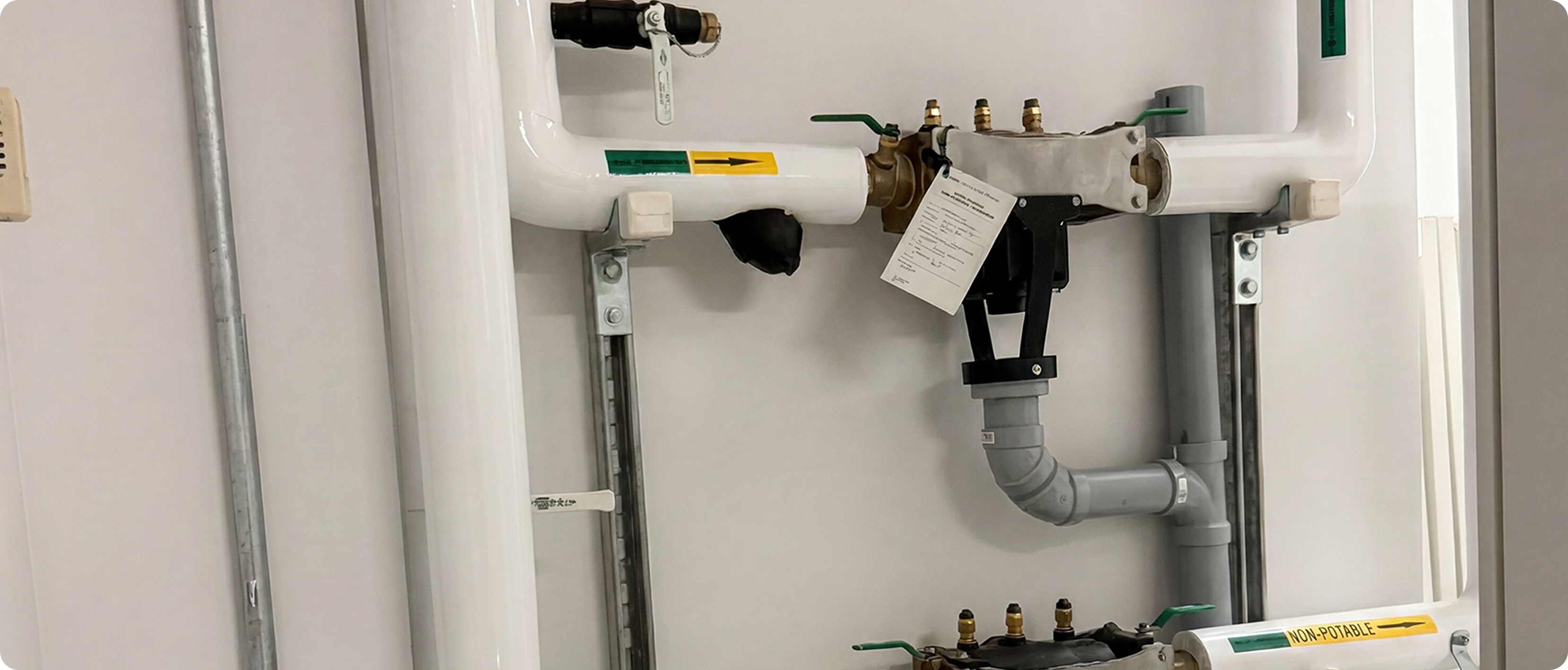
The BPD acts as a highly efficient check valve. Through a system of valves and reduced-pressure zones, it instantly blocks any backflow. If a pressure reversal is detected, the device drains the excess water through a safety outlet, ensuring that not a single drop of contaminated water crosses the protective barrier.
Legal Obligations: A Matter of Compliance and Safety
Regulations in Québec are not mere suggestions, they are legal requirements governed by the Construction Code and municipal bylaws (often based on standard CSA B64.10).

Why are municipalities so strict about this?
- Public health protection: A single unprotected building can contaminate the water network of an entire neighbourhood.
- Civil and criminal liability: In the event of a contamination incident, the building owner is held responsible. Fines can be steep and legal proceedings devastating.
- Insurer requirements: More and more insurance companies are refusing to cover water-related damages or civil liability if proof of annual BPD inspection is not provided.
The mandatory annual inspection
A BPD is a mechanical device with moving parts, seals, and springs that wear out over time. That’s why the law requires it to be tested every year by a certified inspector. The inspector must complete an official report, which is then submitted to the municipality as proof that the building is safe.
The Different Risk Levels: Identifying Your Needs
Not all BPDs are the same. The choice of device depends on the risk level associated with your activity:
Low risk
These are situations where contamination would only affect the aesthetic qualities of the water (taste, odour, colour) without posing a health risk.
Moderate Risk
The risk involves substances that are not immediately toxic but could become so through accumulation or concentration.
High risk
This applies to hospitals, chemical plants, commercial laundries or buildings with complex heating systems. In these cases, a backflow event could introduce toxic, radioactive or bacterial substances into the drinking water supply. The required device (often a reduced-pressure zone assembly or RPZ) must be exceptionally reliable.
Signs That a Technical Intervention Is Needed
Even with annual inspections, certain warning signs should alert you between visits:
- Flow from the safety drain: If your BPD is continuously discharging water through its relief outlet, it means one of the check valves is no longer sealing properly.
- Unexplained pressure drop: A device clogged with scale buildup can restrict water flow throughout the entire building.
- Vibrations or hammering noises: These often indicate pressure instability or a worn check valve spring.

Simplified management with a trusted partner
Managing the daily operations of a business or institution already demands an enormous amount of energy. The technical compliance of your plumbing should not be an additional mental burden. Rigorous planning and a well-designed installation from the start help avoid costly production shutdowns or stressful non-compliance notices.
For over 40 years, Plomberie Corbeil’s approach has been to turn these technical constraints into peace of mind. We understand the challenges faced by contractors and property managers in the region. Our role is to look after your installations with the same rigor as if they were our own, ensuring not only the installation itself, but also the necessary periodic follow-up.
The safety of your water is the foundation of your building’s safety. If you have any doubts about your current installations or if you receive a notice from your municipality, know that our team in Joliette is available to assess the situation. We will support you with an honest analysis of your technical needs, so that everything is compliant and fully functional, plain and simple.